


 October 04, 2023


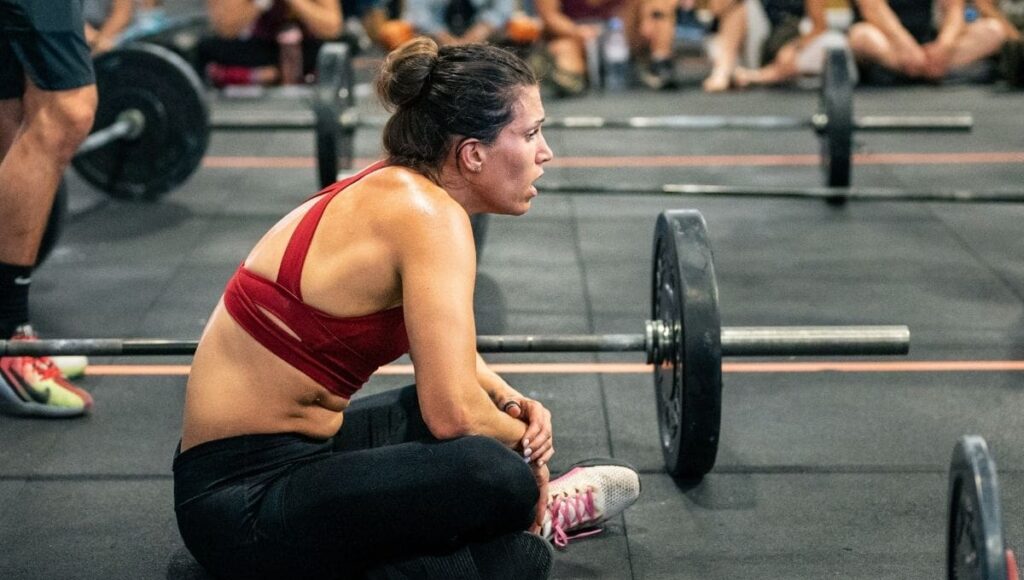
What is the optimal rest time for muscle and strength gains? How could someone even answer that question? Utilising scientific research might be the best approach.
And that is what a video shared by House of Hypertrophy decided to do precisely. In this comprehensive video analysis, we delve into the intricate world of rest intervals between sets and their impact on both strength and hypertrophy outcomes.
The focus of the comparison centres around the durations of one, three, and five minutes, exploring the historical preferences of bodybuilders and powerlifters.
Historically, bodybuilders have favoured shorter rest intervals, as evidenced by a 1987 American paper reporting that bodybuilders rested anywhere from 10 to 90 seconds between sets. Even the iconic Arnold Schwarzenegger, in his book, recommended keeping rest periods to a minute or less. On the other hand, powerlifters, as per the same 1987 American Paper, tended to opt for longer rests, ranging from 120 to 420 seconds between sets.
Research Explains How to Build Muscle Whilst Losing Fat
The Optimal Rest Time for Muscle & Strength Gains
To unravel the scientific support for these practices, we turn to the literature, questioning whether shorter rests enhance muscle hypertrophy while longer rests contribute to muscle strength. The analysis uncovers a nuanced relationship, dependent on the amount of muscle mass involved in the exercises.
 Source: cottonbro studio on Pexels
For exercises engaging a substantial muscle mass, such as compound movements and lower body isolation exercises, the evidence leans towards longer rest intervals. Studies from various years and countries consistently demonstrate that resting 2.5 to 3 minutes between sets elicits greater hypertrophy compared to shorter rest periods. This holds true for both trained and untrained individuals performing exercises like compound movements and leg presses.
5 Methods of Progressive Overload to Force Muscle Growth
However, the narrative takes an interesting turn when we shift our focus to five-minute rest intervals. An English study from 2016 suggests that while long-term hypertrophy outcomes weren’t evaluated, myofibrillar protein synthesis, a key factor in muscle growth, was overall superior with five minutes of rest compared to one minute. This finding challenges the notion that shorter rests, often believed to spike anabolic hormones, are superior for hypertrophy.
The discussion then explores the comparison between 2.5 to 3 minutes and five minutes of rest between sets, but unfortunately, precise research in this area is lacking. The closest study, a 2005 Finnish one, found similar quad gains between two and five minutes of rest, but confounding factors make the results less definitive.
In conclusion, while the evidence leans towards recommending 2.5 to 3 minutes of rest between sets for large muscle mass exercises, the efficacy of five-minute rest periods remains inconclusive, warranting further research. Individuals with time constraints may consider super setting opposing muscle groups to achieve longer rests between sets effectively.
 Source: Victor Freitas on Unsplash
Shifting the focus to exercises targeting smaller muscle masses, particularly isolation upper body exercises, the research is less refined but suggests that shorter rests, around 30 seconds, may be viable, if not potentially superior. Studies on bicep and tricep movements indicate that shorter rests could lead to greater gains, but more research is needed for a conclusive verdict.
How to Burn Fat Without Losing Muscle
The analysis also touches upon the question of whether more sets with shorter rests on large muscle mass movements can produce equivalent hypertrophy to fewer sets with longer rests. Evidence from a 2020 Brazilian study suggests that, indeed, more sets with shorter rest can yield similar hypertrophy, opening avenues for varied training approaches.
In the realm of muscle strength, the consensus leans towards longer rests being more favourable. Multiple studies, including ones from New York in 2016 and the USA in 1995, demonstrate that bench press and squat strength gains are superior with three minutes of rest compared to shorter intervals.
The exploration extends to even longer rest intervals, with a 2010 Brazilian study suggesting that three and five minutes produce similar strength gains, both surpassing the gains from one minute of rest. While the differences between three and five minutes are non-significant statistically, the data hints at a potential favouring of the five-minute rest period, though more research is needed for confirmation.
Bro Split, Upper/Lower, Full Body Workout Compared
In summary, the intricate interplay between rest intervals, muscle mass engaged, and training goals reveals a nuanced landscape. For hypertrophy in large muscle mass exercises, 2.5 to 3 minutes of rest appears advantageous, while the efficacy of five-minute rests requires further exploration. Shorter rests seem viable, if not potentially superior, for smaller muscle mass exercises. Strength gains generally Favor longer rest intervals, with three minutes showing superiority and five minutes holding promise.
This comprehensive analysis emphasizes the need for further research to refine our understanding of optimal rest intervals for different exercises and goals. As the scientific landscape evolves, individuals are encouraged to experiment with different rest intervals based on their preferences, time constraints, and training objectives.
Watch all the info explained in the video below.
0 comments:
Post a Comment