Wednesday, October 4, 2023


Morocco, Spain and Portugal will host the 2030 World Cup — but the opening three matches of the tournament will be played in Uruguay, Argentina and Paraguay.

A South American bid had been put forward to host the entire tournament to mark the centenary of the very first World Cup and FIFA said on Wednesday that the decision to award Uruguay, Argentina and Paraguay the opening games was part of the tournament’s 100th anniversary.


All six countries will qualify automatically for the tournament and it will be the first World Cup to be held across three continents.

Uruguay hosted and won the inaugural World Cup in 1930 and Argentina were the beaten finalists, while the South American Football Confederation (CONMEBOL) headquarters are based in Paraguay. CONMEBOL was the only confederation in existence at the time of the 1930 tournament.

Following the first three matches, Uruguay, Argentina, Paraguay and their three opponents will then travel to Morocco, Spain and Portugal for the remainder of the tournament.

  • Love soccer? Follow your favourite teams and leagues for more breaking news, expert analysis and stories you cannot get anywhere else from our award-winning team.

FIFA president Gianni Infantino confirmed the opening game would be played at Estadio Centenario in Uruguay, the stadium which was purpose built for the 1930 tournament and hosted the final.

The opening ceremony will still take place in Morocco, Portugal or Spain.

The 2030 tournament will see Morocco host the World Cup for the first time, having had five unsuccessful bids to host the 1994, 1998, 2006, 2010 and 2026 versions of the tournament. It will also be the first country to host World Cup matches in North Africa.

Morocco had initially intended to launch a sole bid, before joining forces with Spain and Portugal in March.

Portugal will also host for the first time, having launched unsuccessful bids to host the 2018 and 2022 World Cups alongside Spain, who hosted the 1982 edition. Portugal did host Euro 2004, where they were beaten finalists.

A statement from the Spanish government said the news was “truly transcendental” for sport in the country.

Ukraine had joined the Spain and Portugal bid in October last year with the offer to host some group-stage matches but their readiness for a major tournament had been in doubt amid the ongoing war against Russia.

It will mark the first time a World Cup has been played across six separate countries, with the 2026 tournament in Canada, Mexico and the United States the only other edition to have more than two host nations.


With the Confederation of North, Central America and Caribbean Association Football (CONCACAF) hosting in 2026 and the Confederation of African Football (CAF), CONMBEOL and UEFA in 2030, in line with its rotation policy, FIFA will look to welcome bids from the Asian Football Confederation (AFC) and the the Oceania Football Confederation (OFC) for the 2034 tournament.

“The FIFA Council agreed unanimously that the only bid to host the FIFA World Cup 2030 will be the joint bid of Morocco, Portugal and Spain,” said Infantino. “Two continents – Africa and Europe – united not only in a celebration of football but also in providing unique social and cultural cohesion. What a great message of peace, tolerance and inclusion.

“In 2030, we will have a unique global footprint, three continents — Africa, Europe and South America — six countries — Argentina, Morocco, Paraguay, Portugal, Spain and Uruguay — welcoming and uniting the world while celebrating together the beautiful game, the centenary and the FIFA World Cup,”

Alejandro Dominguez, CONMBEOL president, said: “It’s a historic event and CONMEBOL is happy. We’re honouring the memory of those who came before us and today we’re at the level. We appreciate again the confidence that FIFA and our colleagues showed for a historic event and date.

“The good thing is that in having three countries, three hosts, we’re talking about almost no other investment more than what already exists. And that’s very good news because we all know that in that context, unfortunately we’re not able to compete if this had been a question of investment or money demands.

“If this had been a competition where our governments had to commit the funds which today countries commit to be hosts, I think it would have been an irresponsible proposal from us. And I think we wouldn’t have been able to either because we know that there are other countries who have much better economic conditions and fewer priorities than our nations. So I think this is a super responsible and very viable proposal.”

Later on Wednesday, Saudi Arabia confirmed its intention to bid to host the 2034 men’s World Cup.

The Saudi Arabian Football Federation (SAFF) said on Wednesday that it sought to deliver a “world-class tournament” in the 25th edition, and said its bid would draw inspiration from the country’s “deep-rooted passion for football”.

FIFA criticised for not taking climate change ‘seriously’

FIFA’s decision to host the 2030 World Cup in three continents was later  criticised as an example of football’s “inability to take the threat of climate change seriously”.


“The announcement today that the first three games of the 2030 World Cup will be played in South America, before hosting the remaining matches across two continents, is yet another example of the footballing industry’s inability to take the threat of climate change seriously,” said Elliot Arthur-Worsop, founder of Football for Future, a non-profit organisation that aims to create an environmentally sustainable culture in the sport.

“Every day we are seeing how extreme weather events, flash floods, and heatwaves are intensifying, putting football matches at risk.

“Today’s decision from FIFA forces players and fans to generate tonnes of carbon emissions through unsustainable travel.

“This sets a dangerous precedent for future tournaments at a time when the impacts of climate change are only going to get worse.

“Football has the power to change this and inspire a generation of fans to act.

“It is up to FIFA and other governing bodies to set an example, and take a leading role in creating a greener, more resilient future, to protect the beautiful game that we all love.”

FIFA has previously said it continues “to strengthen its requirements and programmes related to environmental protection”. It claims to have offset the “unavoidable greenhouse gas emissions” from the past three men’s World Cups, as well as the women’s tournament earlier this year.


Is 2030 decision a good move by FIFA?

When you think that FIFA and its confederation decision makers cannot possibly outdo themselves, they do. FIFA’s decision to split the 2030 World Cup between six countries on two continents, and to do so under the guise of “uniting the world,” is laughable. It’s clear that CONMEBOL were never in a position to host the 2030 tournament.

It was a romantic idea for the World Cup to return to Uruguay 100 years later, however, infrastructure concerns made it impossible for Uruguay to host the expanded 48-team field. Did we really think that Europe would allow FIFA to hold two consecutive World Cups in the Americas? FIFA looks like the parent who needed a reward system to appease two spoiled children.

Even the joint CONMEBOL bid, with Argentina and Paraguay, was a haphazard attempt to make a nonviable bid look official. Playing the opening matches in South America will give Uruguay and the CONMEBOL their moment in 2030, albeit short lived. It’s the easiest way to play a World Cup in Uruguay without showcasing the country’s inability to welcome the world.

Now FIFA, UEFA and CONMEBOL will attempt to minimise the obvious travel concerns that a transatlantic World Cup will undoubtedly have. Having to stomach a watered down 48-team World Cup was bad enough. A World Cup on two continents, however, is a bridge too far.




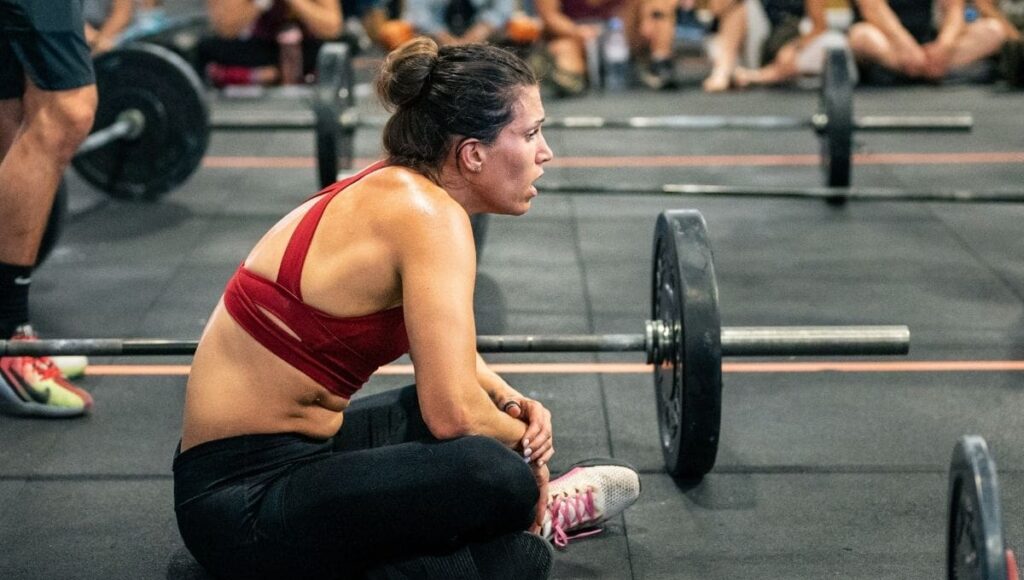
What is the optimal rest time for muscle and strength gains? How could someone even answer that question? Utilising scientific research might be the best approach.

And that is what a video shared by House of Hypertrophy decided to do precisely. In this comprehensive video analysis, we delve into the intricate world of rest intervals between sets and their impact on both strength and hypertrophy outcomes.

The focus of the comparison centres around the durations of one, three, and five minutes, exploring the historical preferences of bodybuilders and powerlifters.

Historically, bodybuilders have favoured shorter rest intervals, as evidenced by a 1987 American paper reporting that bodybuilders rested anywhere from 10 to 90 seconds between sets. Even the iconic Arnold Schwarzenegger, in his book, recommended keeping rest periods to a minute or less. On the other hand, powerlifters, as per the same 1987 American Paper, tended to opt for longer rests, ranging from 120 to 420 seconds between sets.

Research Explains How to Build Muscle Whilst Losing Fat

The Optimal Rest Time for Muscle & Strength Gains

To unravel the scientific support for these practices, we turn to the literature, questioning whether shorter rests enhance muscle hypertrophy while longer rests contribute to muscle strength. The analysis uncovers a nuanced relationship, dependent on the amount of muscle mass involved in the exercises.

worst exercisesSource: cottonbro studio on Pexels

For exercises engaging a substantial muscle mass, such as compound movements and lower body isolation exercises, the evidence leans towards longer rest intervals. Studies from various years and countries consistently demonstrate that resting 2.5 to 3 minutes between sets elicits greater hypertrophy compared to shorter rest periods. This holds true for both trained and untrained individuals performing exercises like compound movements and leg presses.

5 Methods of Progressive Overload to Force Muscle Growth

However, the narrative takes an interesting turn when we shift our focus to five-minute rest intervals. An English study from 2016 suggests that while long-term hypertrophy outcomes weren’t evaluated, myofibrillar protein synthesis, a key factor in muscle growth, was overall superior with five minutes of rest compared to one minute. This finding challenges the notion that shorter rests, often believed to spike anabolic hormones, are superior for hypertrophy.

The discussion then explores the comparison between 2.5 to 3 minutes and five minutes of rest between sets, but unfortunately, precise research in this area is lacking. The closest study, a 2005 Finnish one, found similar quad gains between two and five minutes of rest, but confounding factors make the results less definitive.

In conclusion, while the evidence leans towards recommending 2.5 to 3 minutes of rest between sets for large muscle mass exercises, the efficacy of five-minute rest periods remains inconclusive, warranting further research. Individuals with time constraints may consider super setting opposing muscle groups to achieve longer rests between sets effectively.

Source: Victor Freitas on Unsplash

Shifting the focus to exercises targeting smaller muscle masses, particularly isolation upper body exercises, the research is less refined but suggests that shorter rests, around 30 seconds, may be viable, if not potentially superior. Studies on bicep and tricep movements indicate that shorter rests could lead to greater gains, but more research is needed for a conclusive verdict.

How to Burn Fat Without Losing Muscle

The analysis also touches upon the question of whether more sets with shorter rests on large muscle mass movements can produce equivalent hypertrophy to fewer sets with longer rests. Evidence from a 2020 Brazilian study suggests that, indeed, more sets with shorter rest can yield similar hypertrophy, opening avenues for varied training approaches.

In the realm of muscle strength, the consensus leans towards longer rests being more favourable. Multiple studies, including ones from New York in 2016 and the USA in 1995, demonstrate that bench press and squat strength gains are superior with three minutes of rest compared to shorter intervals.

The exploration extends to even longer rest intervals, with a 2010 Brazilian study suggesting that three and five minutes produce similar strength gains, both surpassing the gains from one minute of rest. While the differences between three and five minutes are non-significant statistically, the data hints at a potential favouring of the five-minute rest period, though more research is needed for confirmation.

Bro Split, Upper/Lower, Full Body Workout Compared

In summary, the intricate interplay between rest intervals, muscle mass engaged, and training goals reveals a nuanced landscape. For hypertrophy in large muscle mass exercises, 2.5 to 3 minutes of rest appears advantageous, while the efficacy of five-minute rests requires further exploration. Shorter rests seem viable, if not potentially superior, for smaller muscle mass exercises. Strength gains generally Favor longer rest intervals, with three minutes showing superiority and five minutes holding promise.

This comprehensive analysis emphasizes the need for further research to refine our understanding of optimal rest intervals for different exercises and goals. As the scientific landscape evolves, individuals are encouraged to experiment with different rest intervals based on their preferences, time constraints, and training objectives.

Watch all the info explained in the video below.

If you are curious about the scientific studies taken into consideration for these findings, you can find them here:


The 2023 college football season is off to an incredible start, and this past Saturday did not disappoint.

Fans were treated to a wild ending in Boulder, as USC held on to beat Colorado, 48-41, in front of a celebrity-packed crowd. In other action, Michigan and Texas cruised to impressive victories, Oregon and Penn State were able to brush off slow starts and put the foot on the gas in the second half, and Georgia showed us that this is clearly not the same team we were used to seeing over past two years when the Bulldogs won back-to-back national championships.

With that said, here is a look at my top 10 rankings following Week 5 of the college football season:

1. Michigan Wolverines (Last week: 3)
Record: 5-0
Week 5 result: Defeated Nebraska, 45-7

Michigan is better than Georgia. They would beat Georgia next week, maybe even in Athens. They have proven it at the line of scrimmage. The Wolverines can play defense, and they can cover. This team is like a boa constrictor. They move slowly, they move methodically, they're not explosive, they're not flashy. They are better this year than they've been in the last two years. They have allowed 13 points all year outside of garbage time in the fourth quarter. Good luck with Michigan. Who is stopping the Wolverines' run game? Nebraska had the No. 2 rush defense in the country heading into this weekend's game, and Michigan ran it 51 times for 249 yards, while averaging 4.9 yards per carry. Man, this team looks good.


2. Texas Longhorns (Last week: 5)
Record: 5-0
Week 5 result: Defeated Kansas, 40-14

This team looks great. I said I wasn't going to talk about Texas until they've done something, and well, now they've done something. This Texas team is so different from what they've been over the last couple of years. My concern with the Longhorns was that they always played down to their level of competition. In large part, they did that because they weren't great at the line of scrimmage. But now, Texas is good at the line of scrimmage. Normally, a game against Kansas, the week before Red River, this would be a classic look-ahead game, and Texas didn't look ahead because this team is great on the line of scrimmage. They play really good defense, and they can run the rock. After Red River, Texas doesn't have a ranked opponent on the schedule. If they win Red River, they have the cleanest path to the playoff of any team in the country, outside of maybe Georgia, because I don't know what in the SEC is real. Texas is for real. Texas is what Georgia has been over the last couple of years: great on defense, consistent effort, great on the line of scrimmage.

3. Georgia Bulldogs (Last week: 1)
Record: 5-0
Week 5 result: Defeated Auburn, 27-20

This Georgia team is not Georgia as we know it. The verdict is in, at least in that regard. It doesn't mean that Georgia isn't good, and it doesn't mean that Georgia won't win the SEC and be in the CFP. But this is clearly not the same Georgia of what we were used to over the last two seasons, when it won back-to-back championships. Georgia beat Auburn on the road, which is obviously a good thing, and I buy into the idea that winning road conference games is hard. But you were also bad at home against South Carolina. 

Now we have data and evidence that show that this Georgia team is a shell of what it was in the past. It's got the same coach and the same star (Brock Bowers), but the heart and soul of what Georgia was over the last two years was being dominant in the run game and on defense. That's not the case right now. Georgia is 67th in yards per carry allowed this season after ranking in the top three in each of the last four seasons. 

4. Ohio State Buckeyes (Last week: 4)
Record: 4-0
Week 5 result: Idle

The Buckeyes are coming off a bye this past weekend following their dramatic victory over Notre Dame. There are several big storylines surrounding this team heading into its Week 6 matchup against Maryland, including the confidence of first-year starting QB Kyle McCord, who led that memorable game-winning drive to beat the Irish in South Bend. Ohio State has its guy at QB, but will he have his best pass-catching weapon this weekend against the Terrapins? Preseason All-American Marvin Harrison Jr.'s status for this weekend remains up in the air after he sprained his ankle against the Fighting Irish. 

On the defensive side of the ball, OSU has been stout all season long, holding opponents to 8.5 points per game and ranking second in the country in scoring defense. Jim Knowles' defense will try and slow down a Maryland team that is putting up 455 yards and 38.6 points per contest this season.

5. Penn State Nittany Lions (Last week: 6)
Record: 5-0
Week 5 result: Defeated Northwestern, 41-13

Penn State was tied at the half with Northwestern this past weekend, and then, just like that, James Franklin's team came alive on both sides of the ball and cruised to a 41-13 win over the Wildcats. The Nittany Lions' defense held Northwestern to just three points on its final nine drives, looking like the same group that was coming off a dominant showing against Iowa the previous week. This is a unit that ranks first in the country in total defense, and third in scoring defense, takeaways and sacks. 

After his 325-yard, three-touchdown performance in Week 1, Drew Allar has cooled off, averaging under 200 yards per game over the past four contests, including throwing for 189 yards and just one score against Northwestern. Allar and the Nittany Lions are off this upcoming weekend and then will play FCS UMass before making the trip to Columbus to take on the Buckeyes in a much-anticipated Big Ten showdown, which should have major conference championship and College Football Playoff implications.

6. Florida State Seminoles (Last week: 7)
Record: 4-0
Week 5 result: Idle

Much like Ohio State, Florida State is also coming off a bye this past weekend following a big-time victory in the previous week. Jordan Travis threw for 289 yards and two touchdowns to help the Seminoles snap a seven-game losing streak against ACC foe Clemson. Now, Travis and the Seminoles shift their focus to a Virginia Tech team that is 2-3 heading into this upcoming week. 

The good news is that Mike Norvell's team sits at 4-0 and sits here at No. 6 in my latest top-10 rankings. The not so good news is that their win over LSU is looking less impressive by the week, as the Tigers fell to 3-2 after dropping a game to Ole Miss this past weekend. Also, the Seminoles have been outgained by 100-plus yards in each of their last two games, both of which ended up resulting in narrow victories.

. Washington Huskies (Last week: 2)
Record: 5-0
Week 5 result: Defeated Arizona, 31-24

Michael Penix Jr. leads the country in passing, averaging 400 yards per contest. He is the real deal, guiding an offense that is posting 569 yards per game, which leads all FBS teams, and 46 points per game, which ranks fourth. However, the Huskies were in a tight battle this past weekend against Arizona, despite the fact the Wildcats were playing without their starting quarterback, Jayden de Laura. Washington was able to hold on for a 31-24 win over Arizona, but the Huskies could never quite pull away in this one.

Now sitting at 5-0, Kalen DeBoer's team has a bye this weekend before hosting Oregon in a top-10 showdown on Oct. 14. Five of the Huskies' remaining seven games are against teams ranked in the top 20 of the AP Top 25 Poll.

8. Oregon Ducks (Last week: 9)
Record: 5-0
Week 5 result: Defeated Stanford, 42-6

After trailing 6-0 at Stanford after the first quarter, the Ducks put their foot down and ran off 42 straight points in a dominant win over the Cardinal. Oregon is one of only two FBS teams averaging 50-plus points per game this season, with the other being USC. Bo Nix, who now has the third-best Heisman odds behind only Penix and Caleb Williams, is averaging more than 300 yards per game through the air. The senior QB is completing 80% of his passes through five games – which leads the country – in addition to throwing 16 touchdowns and just one interception.

9. USC Trojans (Last week: 8)
Record: 5-0
Week 5 result: Defeated Colorado, 48-41

Even in a win, Saturday was a massive disappointment for USC. This team is really good at football, and it has the best player in college football. USC is an elite team and an elite offense because of Caleb Williams. I spoke constantly about the way I feel about Lincoln Riley as a playcaller and Williams as a quarterback during our call of Saturday's game. All of that is still true following USC's win.

The one question we had was about the defense. Was it going to improve from what we saw last season? You're not going to have Williams forever, and when you have a generational talent, you're going to want to maximize that talent. I thought Matt Leinart brought up a good point in the pregame show on the pressure on Riley to win now. I totally understand it and agree, because next year, it won't be this way at quarterback. 

That's why Saturday was a massive disappointment. That defense played basically the same way it did last year. Colorado scored 41 points in the final three quarters and 27 in the second half. Colorado was barely running the ball before Saturday, averaging just over 50 rushing yards per game through the first four weeks. The Buffaloes rolled out there and, for the majority of the game, were running for five yards per carry when you take sacks out. When you look at the statistics from last year, USC was not even close to being good enough defensively to be a legitimate title contender. I thought all it needed to be this season was just average or possibly good on that side of the ball. 

USC is 63rd in scoring defense and 103rd in total yards per game - and the Trojans haven't even faced the meat of their schedule yet. That's alarming.

10. Oklahoma Sooners (Last week: Unranked)
Record: 5-0
Week 5 result: Defeated Iowa State, 50-20

Brent Venables' team is putting up more than 47 points per game this season, while also holding opponents to under 11 points per contest. The result? … Oklahoma is 5-0, having won every game by at least 14 points. The Sooners are fresh off a 50-20 win over Iowa State, a game in which they outscored the Cyclones 29-0 over the final 2.5 quarters. Dillon Gabriel has thrown for 300-plus yards in four of the team's five games this season, but the Sooners are averaging just 4.0 yards per carry in the run game, which ranks 93rd in the country.